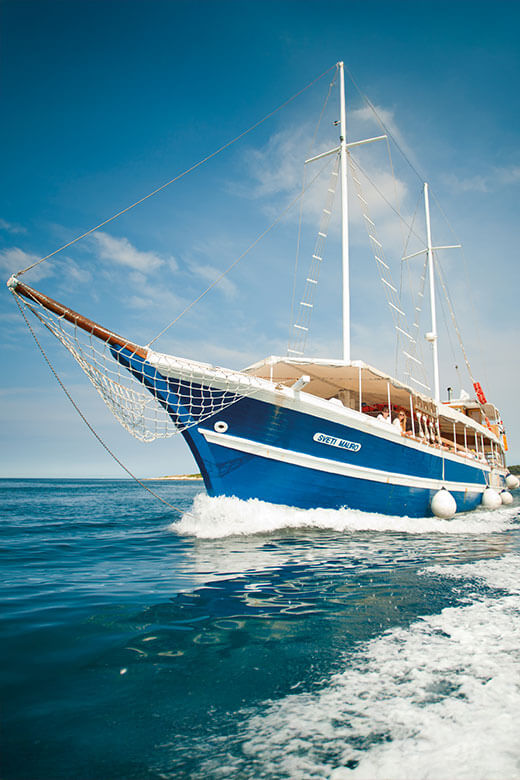
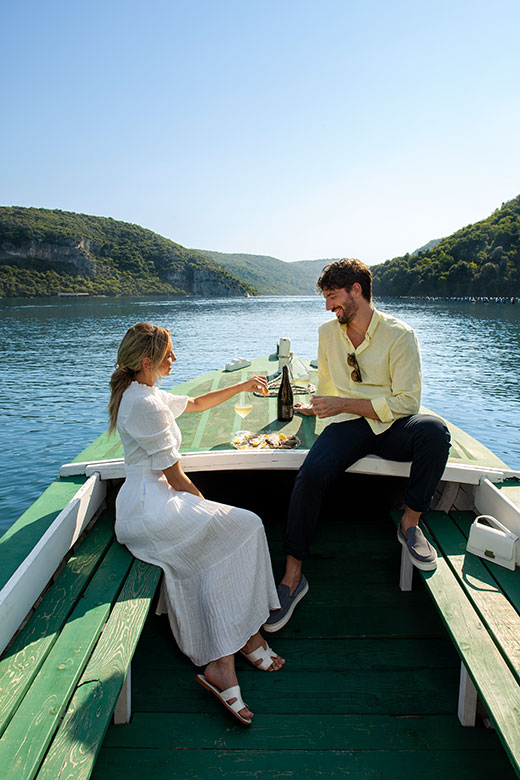
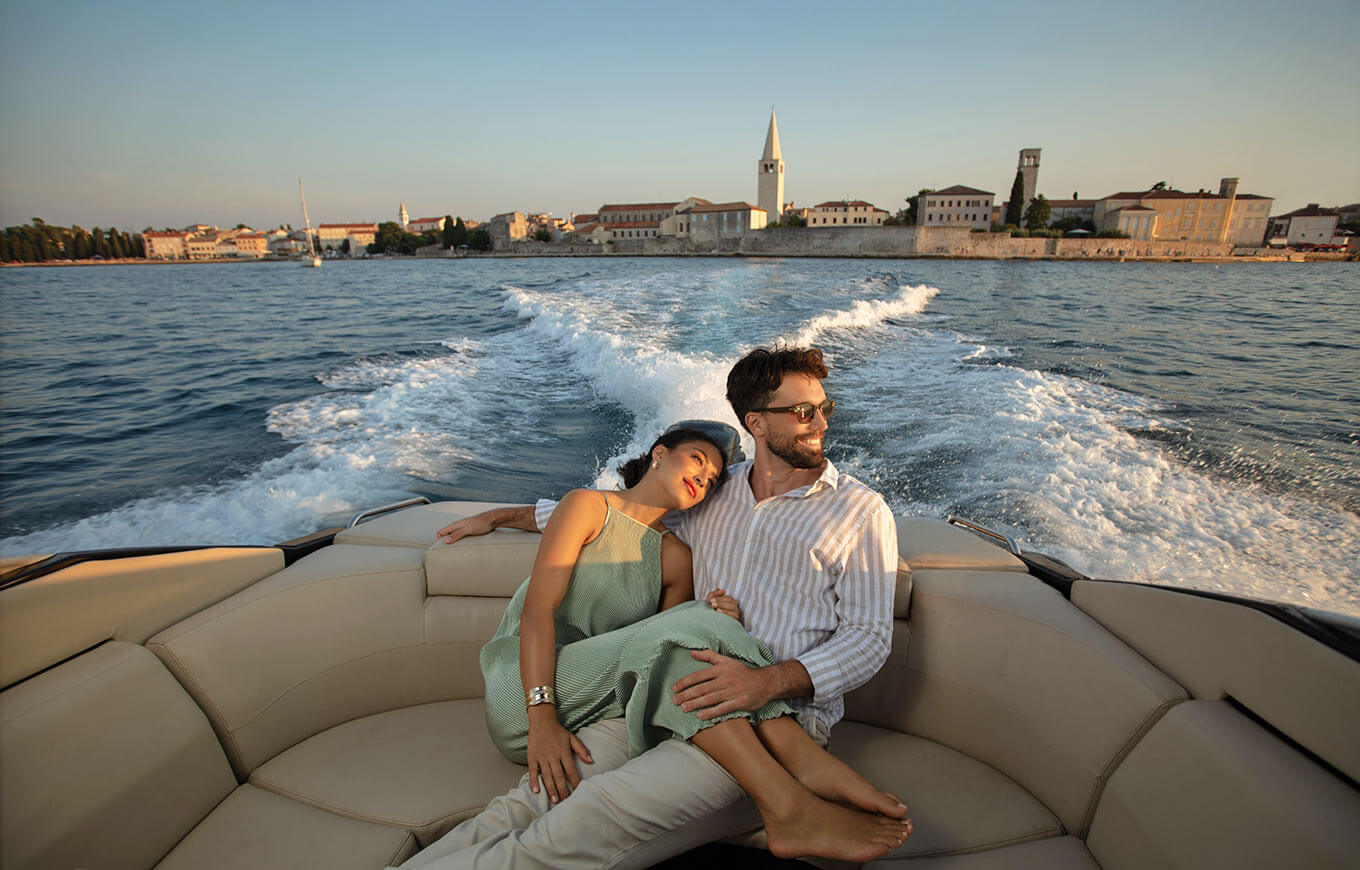
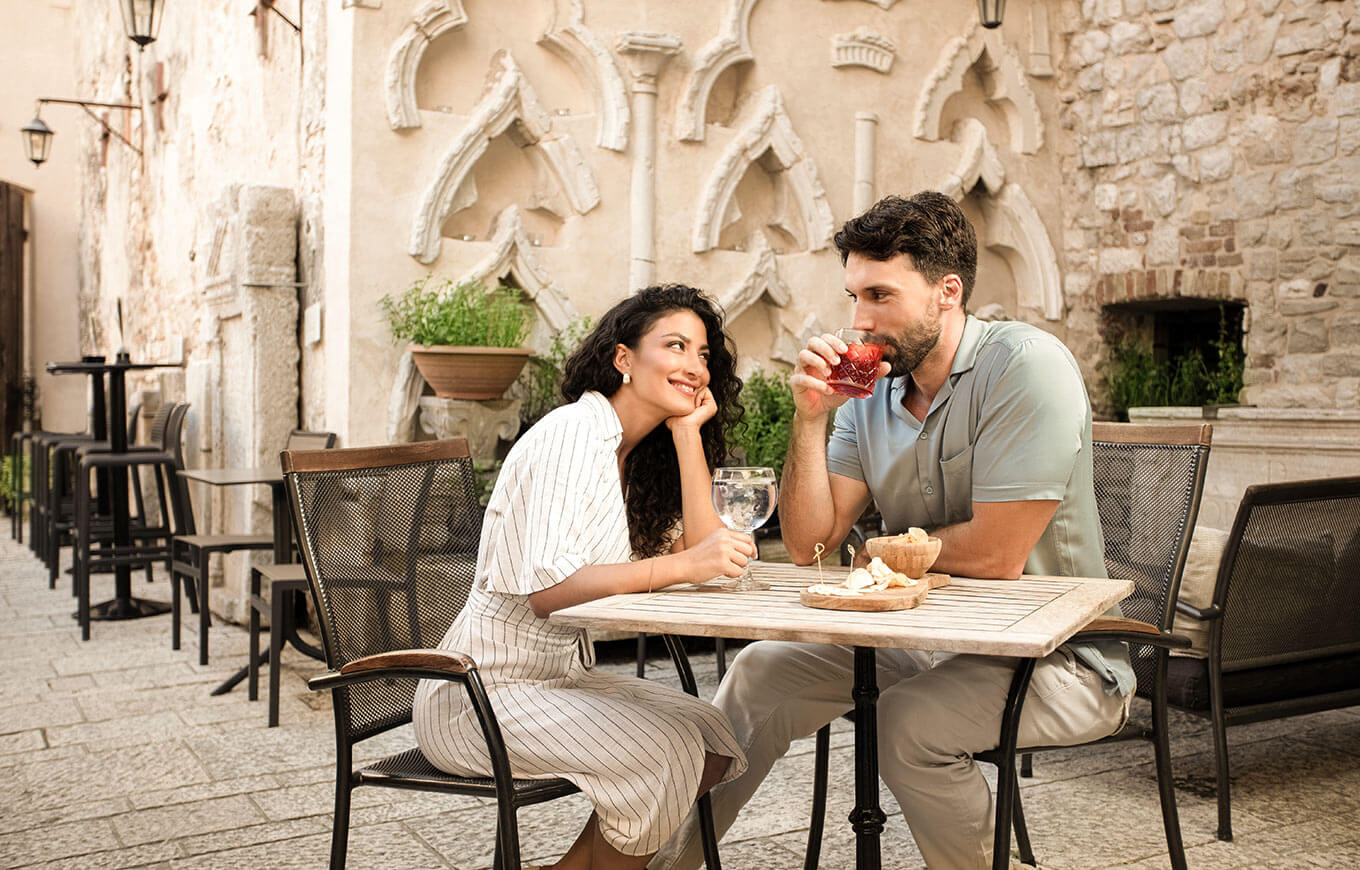
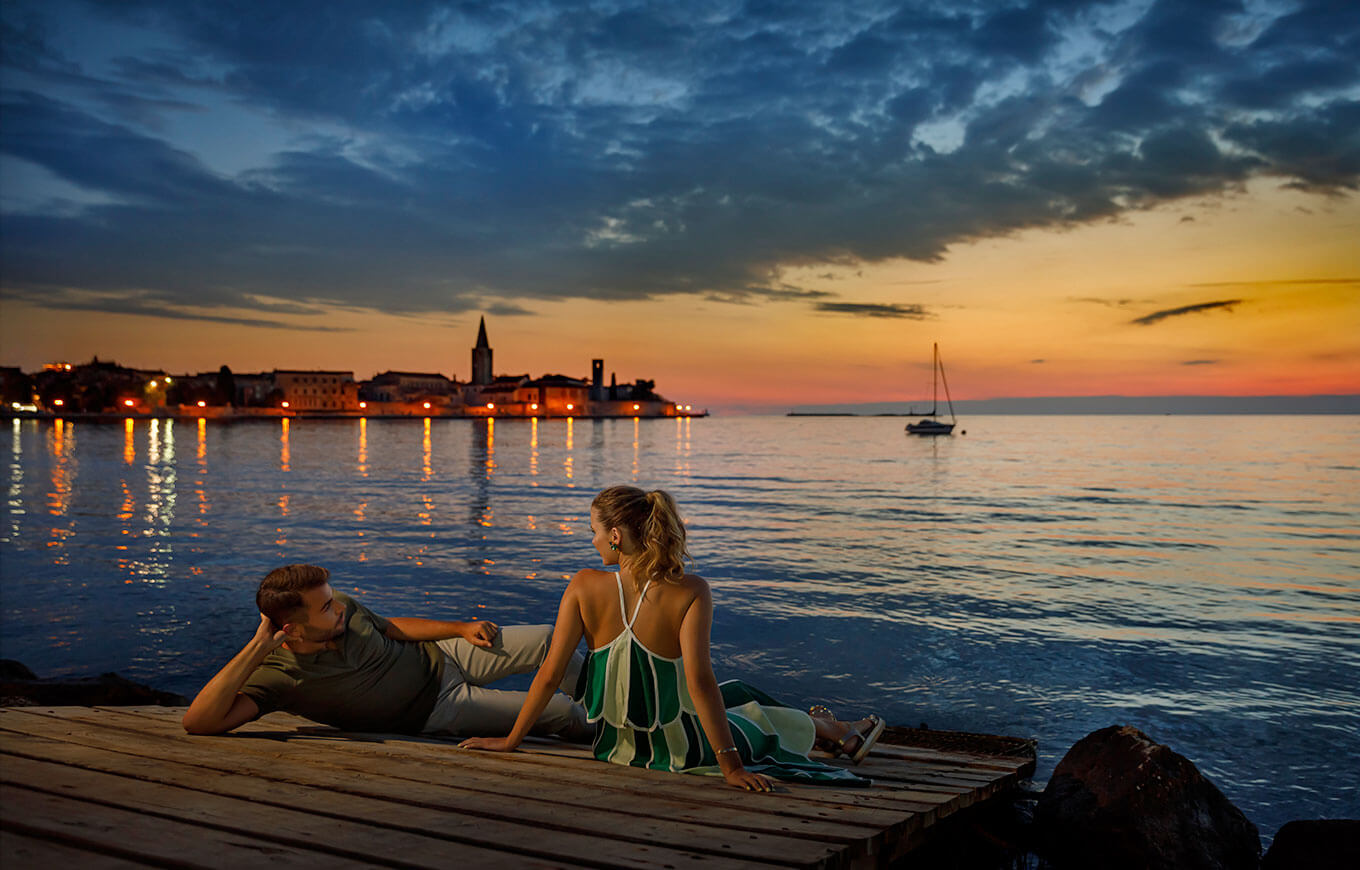
Uncover the mysteries of Poreč’s old town, bask in the beauty of its sun-soaked beaches and delight in its lively culture.
Poreč
A millennium of history
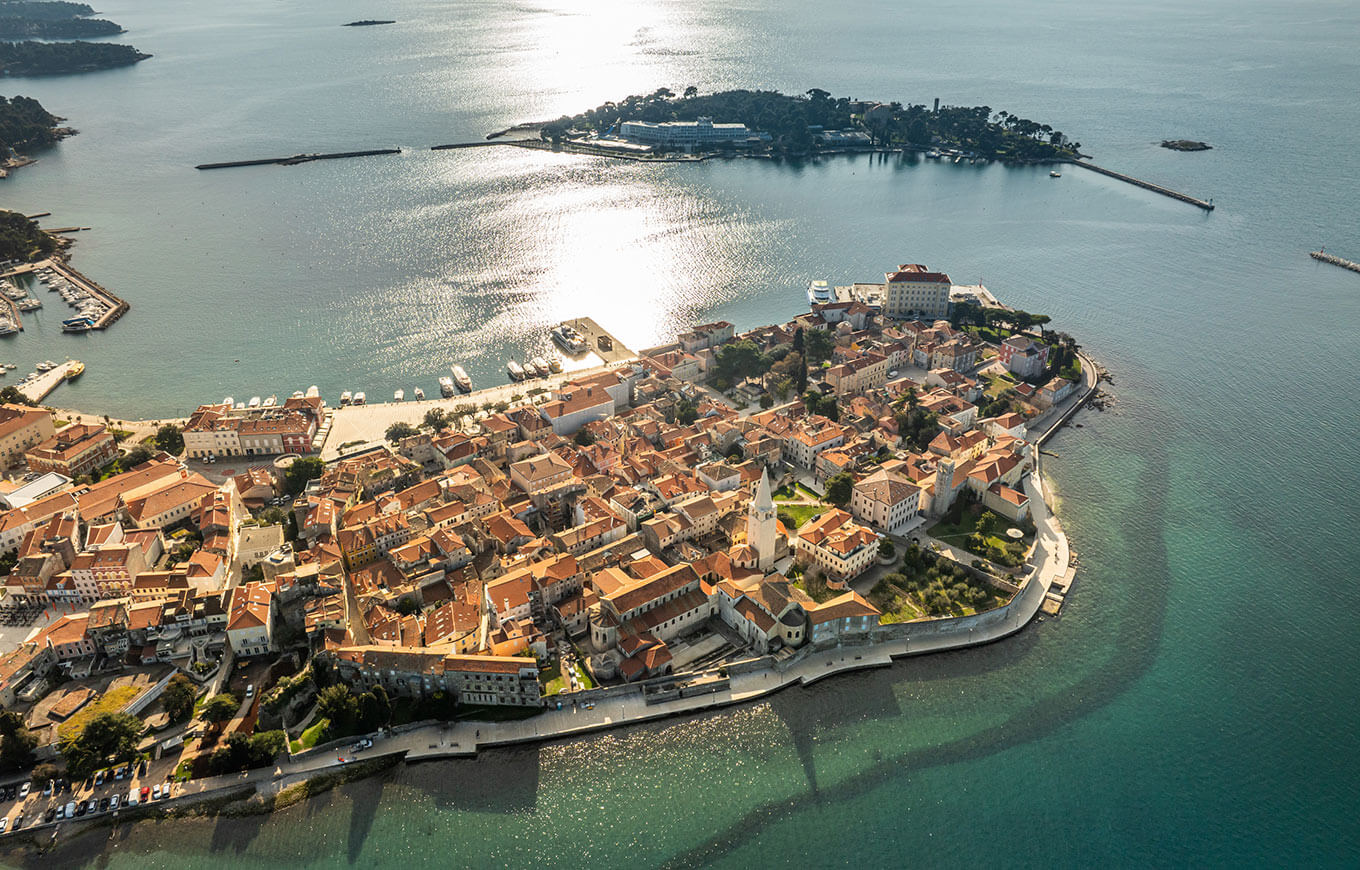
Discover Poreč, the perfect blend of ancient charm and modern adventure on Istria’s coast. Offering diverse accommodation and unspoiled beaches, it’s a haven for history enthusiasts and sports lovers alike. Explore Roman streets, marvel at the UNESCO-listed Euphrasian Basilica and enjoy activities from sailing to hiking in this stunning destination.
Find out more
Rich history
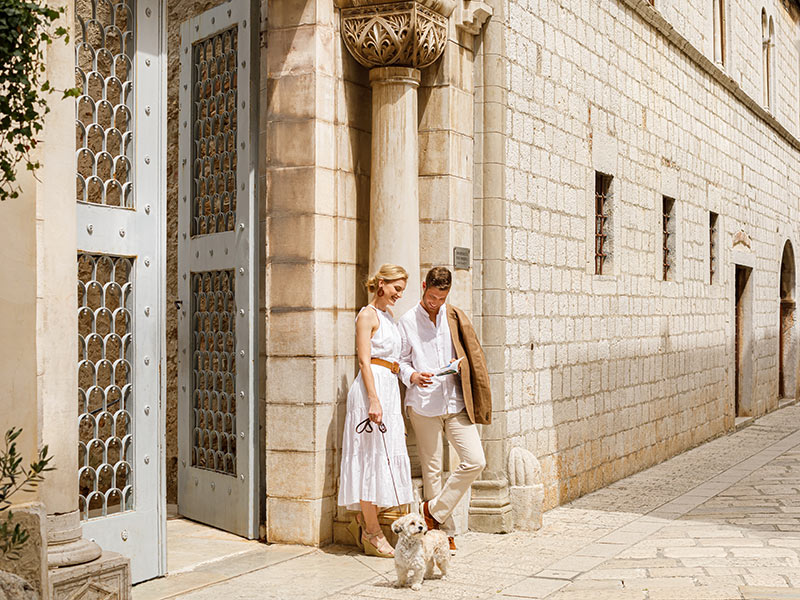
Explore a town where every corner is a gateway to the past
Blue Flag beaches
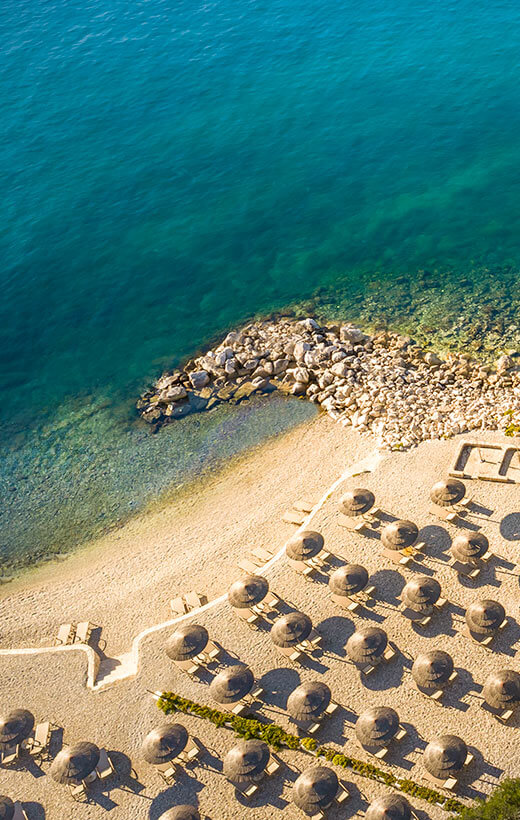
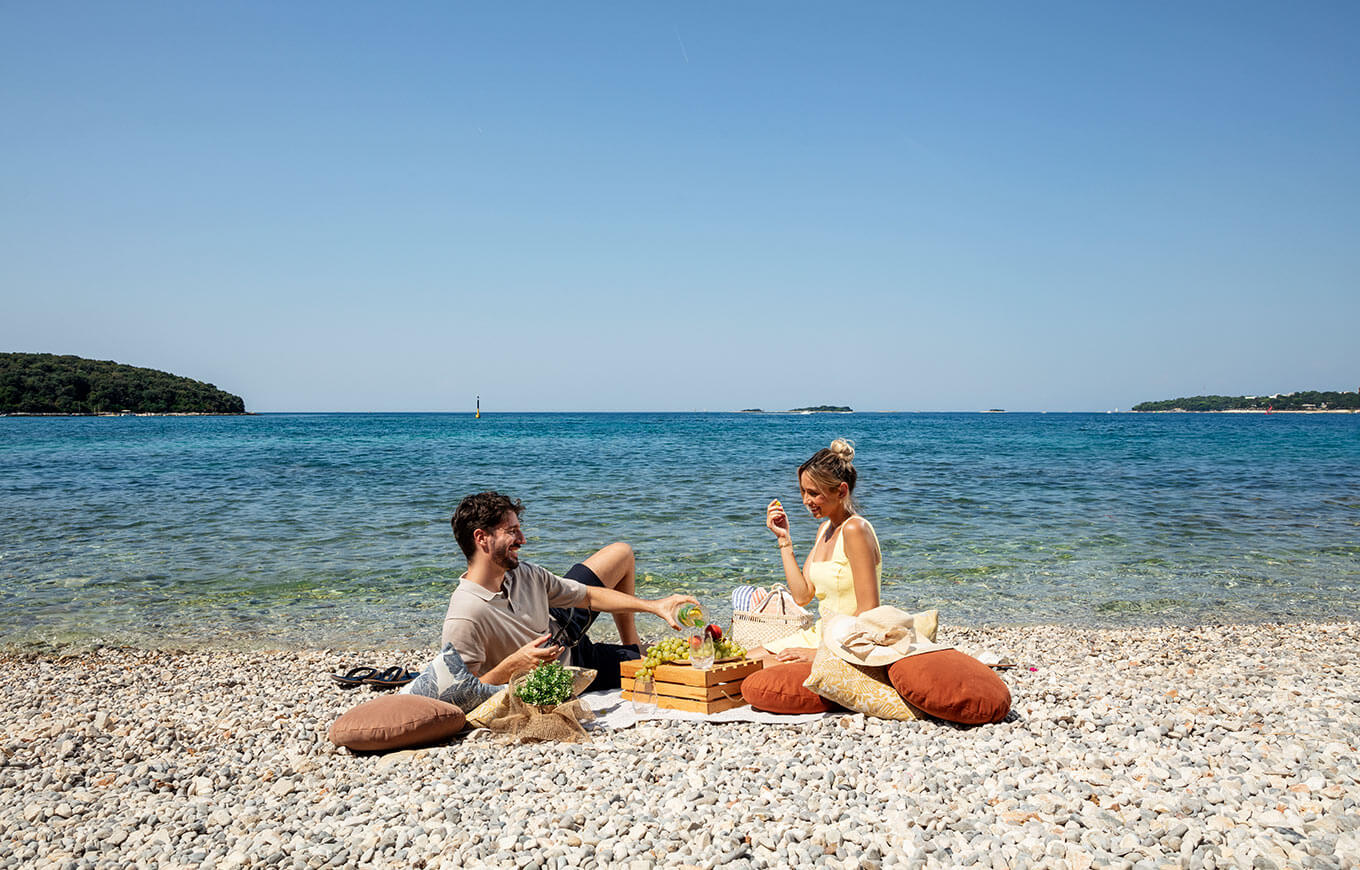
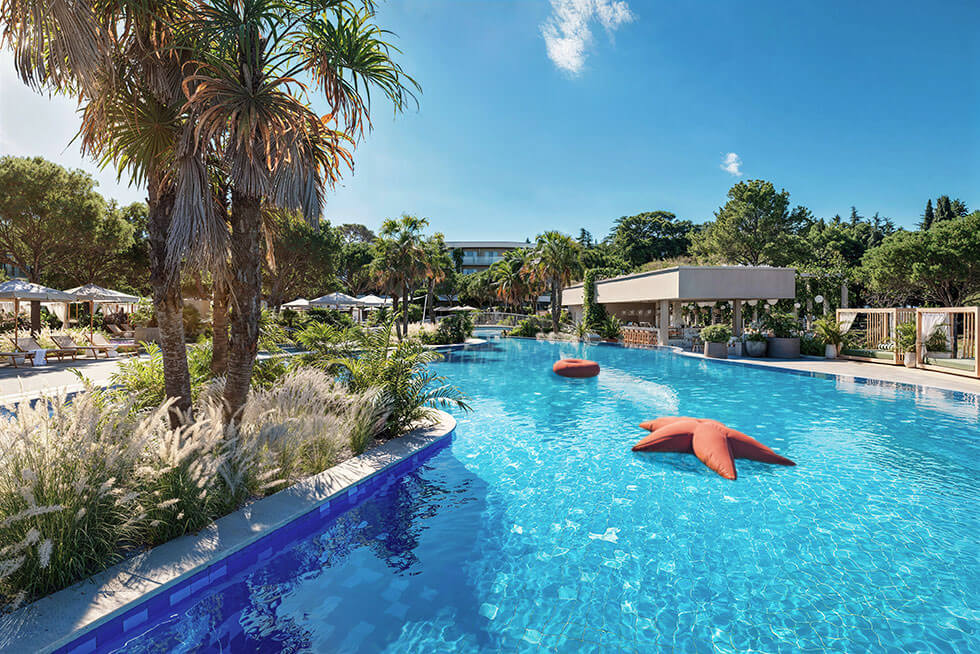
Over 20 well-kept beaches, perfect for swimming and sunbathing
250 km of cycling trails
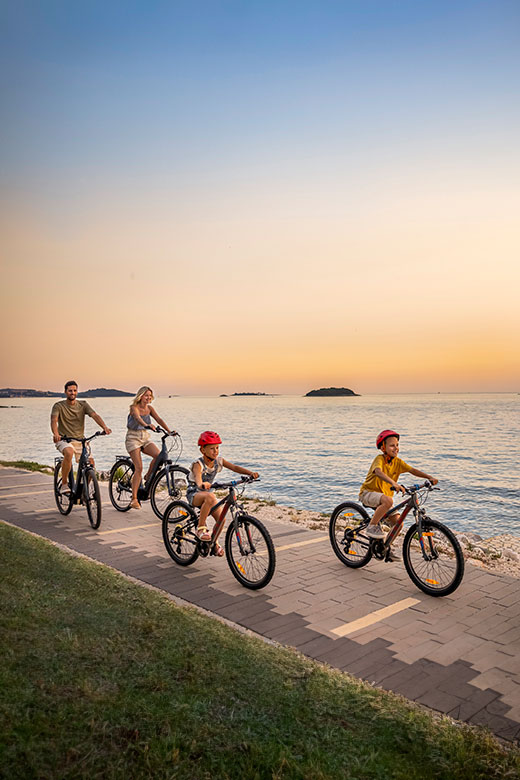
From breathtaking seaside paths to enchanting hinterland routes
Istrian cuisine
Savour the exquisite flavours of traditional pastas and the prized truffle
Location
On the western coast of Istria
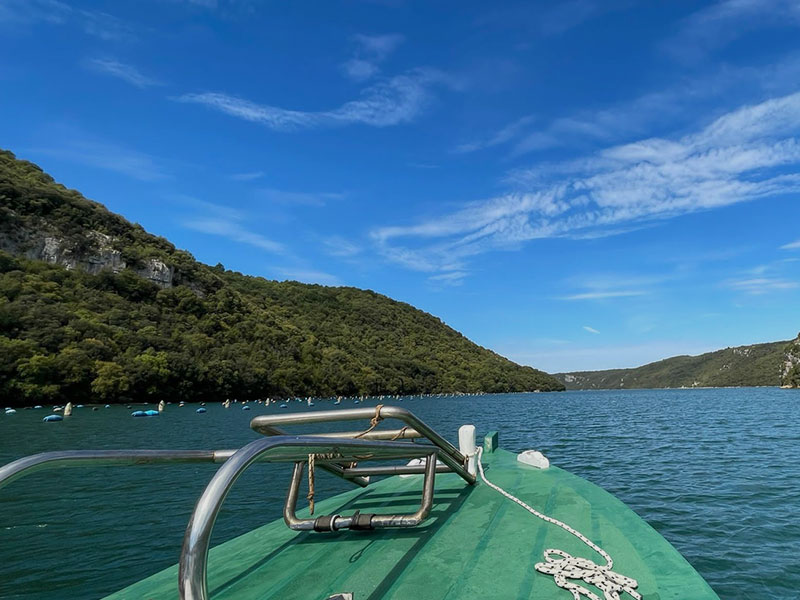
Poreč is centrally located on Istria’s west side, facing the charming island of Sveti Nikola. The Poreč Riviera stretches for 37 km along the coast, reaching from the Mirna River up north down to Vrsar in the south. It encompasses a diverse landscape that melds historical allure with natural beauty.